

- 20 July 2023
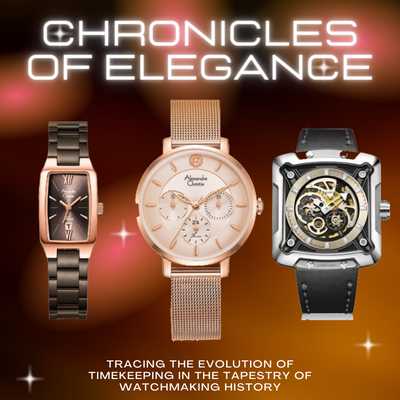
Chronicles of Elegance: A Journey Through Watchmaking History
Timekeeping has been an essential part of human civilization for centuries. From ancient sundials to today’s smartwatches, the history of watchmaking is a fascinating journey through the development of technology, craftsmanship, and design. In this blog post, we will explore the rich history of watchmaking, highlighting key milestones and innovations that have shaped the way we measure time. Join us on a captivating journey through time.
I. Ancient Timekeeping Devices
The origins of watchmaking date back thousands of years, with our ancestors developing ingenious ways to track time. In this section, we’ll delve into some of the most remarkable ancient timekeeping devices:
Sundials: The earliest timekeeping device, sundials used the position of the sun’s shadow to tell time. They were prevalent in ancient civilizations like the Egyptians and Greeks.
Water Clocks: Also known as clepsydra, these devices used the flow of water to measure time, making them the predecessors of modern clocks.
II. The Mechanical Watch Renaissance
The Middle Ages saw a resurgence in timekeeping technology, with the development of mechanical watches. Here, we’ll discuss key developments during this period:
Clock Towers: Monasteries and cathedrals built clock towers with impressive mechanical clocks, becoming centers of timekeeping in medieval Europe.
Spring-Driven Watches: In the 16th century, Peter Henlein is credited with creating the first portable watch, which was spring-driven and worn as a pendant.
III. The Swiss Watchmaking Revolution
The Swiss watchmaking industry revolutionized watch design, craftsmanship, and precision. This section will discuss the rise of Switzerland as a watchmaking powerhouse:
John Calvin’s Influence: In the 16th century, John Calvin’s ban on wearing jewelry in Geneva led to skilled jewelers and goldsmiths transitioning to watchmaking, laying the foundation for Switzerland’s watch industry.
Watchmaking Centers: The establishment of watchmaking centers like Geneva and La Chaux-de-Fonds contributed to the reputation of Swiss watches for precision and quality.
IV. The Industrial Age and Mass Production
The 19th century marked a significant shift in watchmaking, with the Industrial Revolution bringing about mass production. Key points to be covered:
The Waltham Watch Company: Founded in 1854, this American company revolutionized watchmaking with interchangeable parts, making watches more affordable and reliable.
Railway Watches: The demand for accurate timekeeping led to the development of railway watches, which played a crucial role in the safety of train transportation.
V. The 20th Century and Beyond
The 20th century saw remarkable innovations in watchmaking, from the introduction of wristwatches to the rise of luxury watch brands. Some highlights in this section include:
World Wars and Wristwatches: Wristwatches gained popularity during World War I when they proved more practical than pocket watches for soldiers.
Quartz Revolution: The advent of quartz technology in the 1960s led to the mass production of affordable and highly accurate watches.
Smartwatches: The 21st century has witnessed the emergence of smartwatches, which combine timekeeping with digital functionalities.
The history of watchmaking is a testament to human ingenuity and our constant quest for more accurate and sophisticated timekeeping devices. From sundials and water clocks to the precision of Swiss watchmakers and the digital age of smartwatches, our ability to measure time has come a long way. As we continue to innovate, it’s exciting to think about what the future holds for the world of watchmaking.